
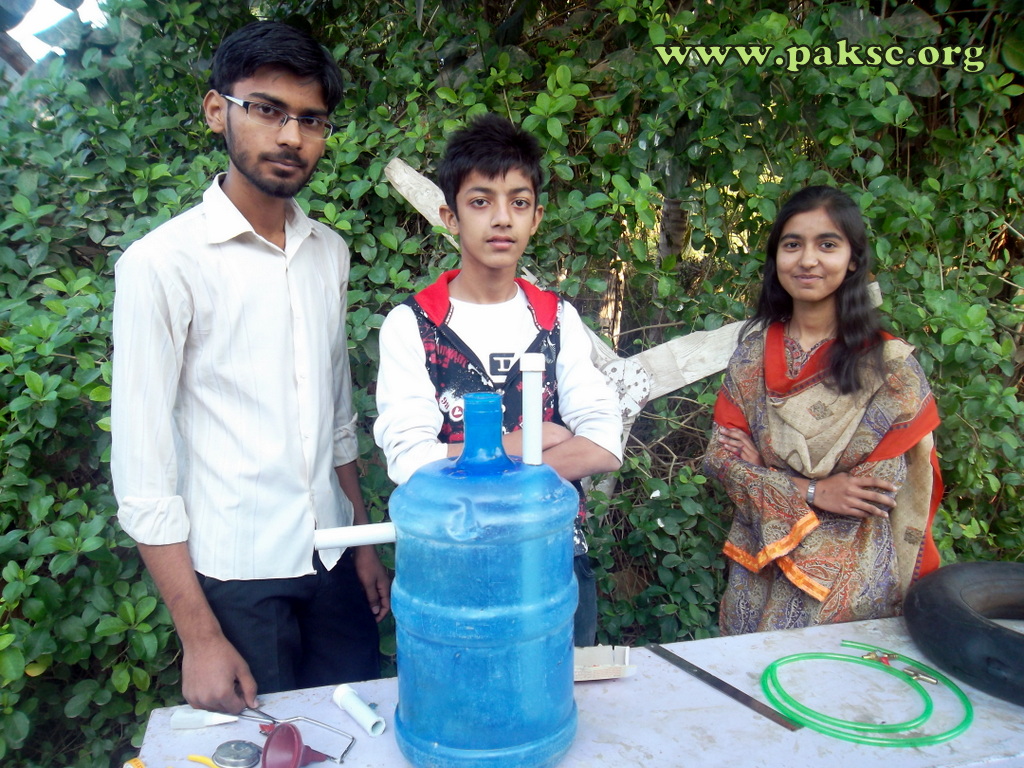
How to Make Biogas Plant? DIY Anaerobic Digester Experiment
🔬 Biogas Plant Experiment (DIY Anaerobic Digester)
Learn how to produce renewable energy from organic waste by building your own biogas plant. Perfect for science fair projects and understanding sustainable energy solutions.
- How biogas is produced from organic waste
- How to build a simple biogas plant (anaerobic digester)
- How anaerobic digestion works to produce methane gas
- Practical applications of renewable energy from kitchen waste and animal manure

🔬 The Concept of Biogas Plant (Anaerobic Digester)
The purpose of this project is to discover ways to produce Biogas with alternate sources by using our local resources. It can help students understand the basics of anaerobic digestion and production of gas from different organic kitchen waste. The basic task is to design, make, and test a simple waste digester and gas collection system. One can check various facets of the anaerobic digestion process.
📘 Background Information
What is Biogas?
Biogas is known as a source of renewable energy and it’s made mostly of methane (60-70%) and a mixture of CO₂ (carbon dioxide), H₂S (hydrogen sulfide), NH₃ (ammonia), and SO₂ (sulfur dioxide). This gas is formed when biological matter (usually cow manure) is decomposed in an environment with no oxygen present by bacteria.
It has been popular as a source of energy for over 200 years. To produce biogas, one has to first build an anaerobic (no oxygen present) digester, or an enclosed tank (usually made of steel), where specific types of organic wastes are placed for bacteria to decompose them. In the environment, it is produced naturally in deep soils, lake bottoms, and wetlands.
- Biogas is mostly methane — highly explosive and dangerous
- No flames or electrical items around the digester
- Place digester in a well-ventilated area
- Wash hands thoroughly with soap and water after handling
- Carbon dioxide can cause asphyxiation; H₂S can harm lungs
⚙️ Conditions for Biogas Production
- Water to biomass ratio: 1:5 (or 50:50 for smaller setups)
- pH level: Should stay around 7 (acidic/basic kills bacteria)
- Temperature range: 0°C – 69°C; ideal production between 29°C – 60°C
- Optimal temperature: 35°C gives highest production
- Daily feeding: Small amount of fresh biomass added daily
- Agitation: Shake well to mix biomass with water
📌 Note: When using manure from any animal, remember: ANTIBIOTICS MUST NOT BE GIVEN TO THE ANIMAL! Antibiotics kill the gas-producing bacteria.
🧰 Materials Required
- Digester seed material
- Digester feedstock (animal dung, vegetables)
- 20-litre water can
- 1/4″ plastic tubing
- Medium size tyre tube (gas storage)
- Tub for mixing water feedstock
- PVC Pipe 3/4″ (2.5 ft)
- T-valve
- Valve
- Super Glue
- Fine Sand
- Soldering Iron
- Black Color Paint
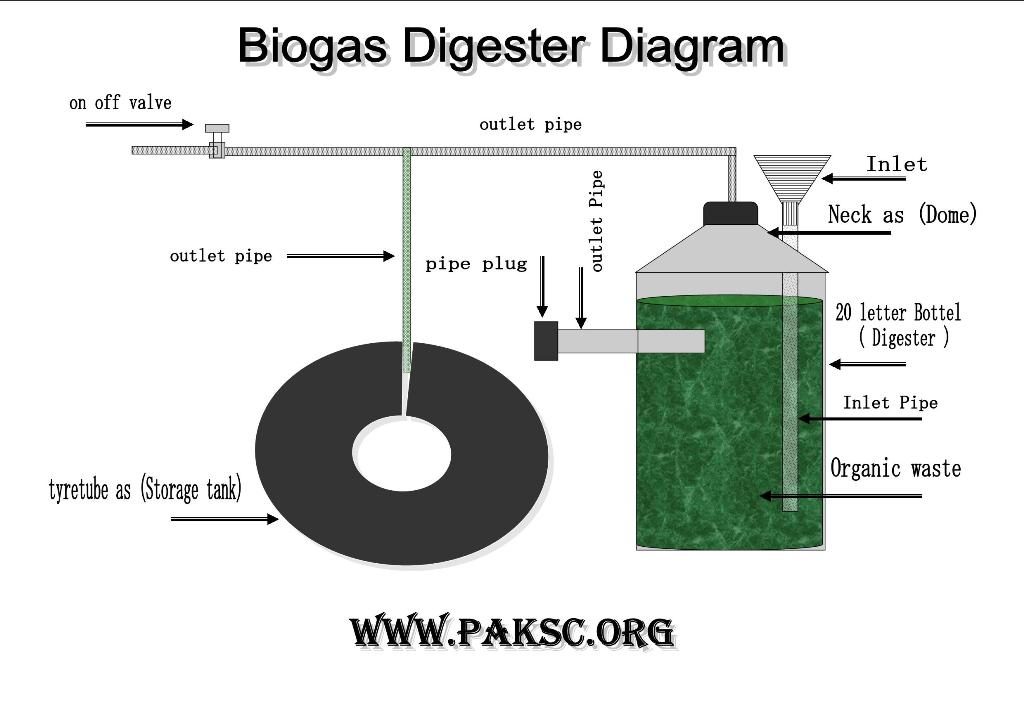
📊 Biogas Plant Digester Diagram
🛠 Procedure
Make the biogas digester according to the diagram. If you cannot understand, watch the following video (Urdu language with subtitle option):
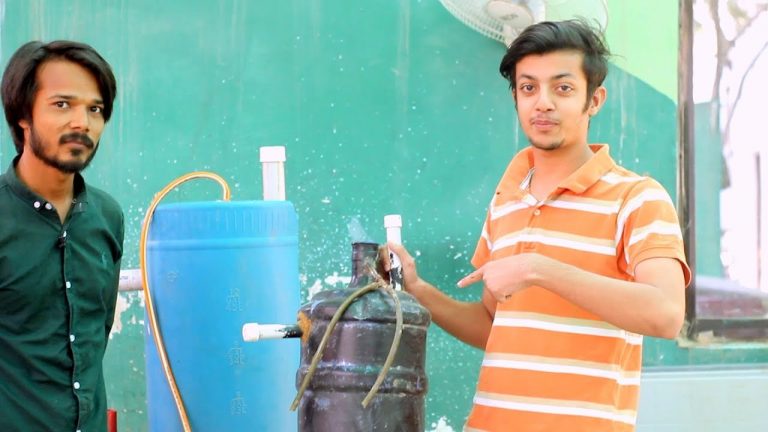
📸 Construction Photos (2012 Project)


⚠️ Important Notes for Construction
- The container must be airtight — digester works strictly without oxygen
- Do not use transparent/translucent containers; paint it black to maintain temperature and prevent algae growth
- Use standard gas fittings (gas pipes, gas nozzles) — biogas is highly flammable
- For 20L container: use 17-18L mixture in 50% dung + 50% water ratio
- First time use animal dung; later can use plant waste, dried leaves, paper — always 50% water ratio
🔄 Feeding the Digester
- Keep outlet open while feeding so slurry comes out
- First gas production may take up to one week — be patient
- Add 1 litre of fresh feed (50% biological waste + 50% water) daily
- Cheapest and safest gas storage: old tire tube (bicycle or car tire)
🚨 Precautions
- Avoid direct sunlight on the digester
- Avoid high temperature variations — keep between 30°C – 40°C
- Keep valve face away when testing biogas
- Check pipes for dung/water blockage if no gas after one week
- Avoid dung from animals given antibiotics
🎥 Video Tutorial: Science Project DIY Biogas Plant (Anaerobic Digester) Construction
📸 Biogas Plant in Action
🏗️ Building Up a Prototype Biogas Plant
- Container must be airtight
- Paint black — prevents algae, maintains temperature
- Use standard gas fittings
- Use animal manure as per container dimensions (50% dung + 50% water)
- First time use animal dung; later any biological waste works
🔗 Related Resources
❓ Frequently Asked Questions
- Is the cow manure dry or wet? — Fresh/wet manure works best
- How long can a car tire-tube biogas be used? — With daily feeding, several weeks
- What is the role of both pipes? — Inlet for feeding, outlet for slurry removal
🚀 Need Help?
Ask questions and share your project with our community
💬 Join WhatsApp Channel 🔧 Get Help (DoScience Portal)Share your results with us! Tag @PakistanScienceClub on social media or email your project photos.
Biogas plant experiment | DIY anaerobic digester | Renewable energy science project | Pakistan Science Club



why? because of you I need to read all of this >:v
But still it’s a good job
excellent job dear
Thank you
Excellent project
Thank you
excellent project
some time it contain more CO2 than methane so it can not catch the fire so you have to empty container and wait for next filling.
Hi Abdul, I used fresh cow dung in my experiment as you answered me on youtube. It was all successful and produces a good quantity of methan. I also tried vegetable peels and kitchen wast mixed with outflow of fermented cow dung. It produces something but this time it is not burning. Can you explain where am I doing mistakes?
Cow dung should be wet and the amount of biogas can be calculate with upside down container
Can you help me please. How can you calculate the amount of gas produced in a 20 L bottle? If i will be having 18 L of 1:1 ratio of water and cow dung?
And is the cow dang used wet or dry?
please tell me how long does it last when i make the same biogas plant using animal manure and food wastes (pls separate the two)
please do comments if you have any question?
please tell me how much gas will produce in 200 litter tank andalso tell me that how much kg/g in one 1 cubic meter thankxxxx
it produce 0.3 to 0.5 meter cube
Old 33 comments
Wednesday, 11 February 2015 22:56 posted by chrissti
what are you changing in the experiment?
Saturday, 20 September 2014 18:47 posted by Muhammad Afzal Khan
Well Done, Please explain the amount of gas we produce with one 10 kg dung and water filling, May we cook 1 month food for a normal family, Best Regards, Muhammad Afzal Khan
Tuesday, 26 August 2014 11:48 posted by ABDUL
@ Marian
Dear Marian
Thanks for comment I will try to answer your questions.
1st
1. Should the input pipe be long until almost reached the bottom of the tank ?
Ans. yes input pipe should be 2 or 3 inch above at the bottom.
2. The mixture has to be supplied via input pipe daily ? Can this be let open ? This INLET pipe will be in contact with the oxygen from air, so it is ok ?
Ans. Yes daily fed is must after feeding you have to close inlet with cap or with other stuff . pipe can be in air there is no effect on gas production
3. The gas output pipe is fine, i got it how it works and where it will be connected.
4. The output pipe for the mixture is quite unclear for me. How it works ?
Ans. output pipe cap only open when you will feeding to digester, outlet pipe use to excrete digester waste.
In my tank, how should we place it ?
Ans. your diagram of digester is fine you can make like diagram.
If it is too low, the mixture will get out.
I Can not understand this question
If is too high, the mixture will get air through it and the produced gas will be mixed with O2 and it will not have the desired effect.
you can also see this link http://paksc.org/pk/biogas-plant-design here is some useful article and videos I hope you will understand
Flag As Spammer
Tuesday, 26 August 2014 11:29 posted by Marian
Hello,
I am writing you from Romania.
I am looking to build a biogas plant at home and i have looked at some designs on the Internet.
Before i start building it, i just wanna get cleared with some questions.
Can you guys help me to build it ?
Mainly, i have some 300-500 liters tanks made of iron. I have made a design but i am not very sure o it.
1. Should the input pipe be long until almost reached the bottom of the tank ?
2. The mixture has to be supplied via input pipe daily ? Can this be let open ? This INLET pipe will be in contact with the oxygen from air, so it is ok ?
3. The gas output pipe is fine, i got it how it works and where it will be connected.
4. The output pipe for the mixture is quite unclear for me. How it works ?
In my tank, how should we place it ?
If it is too low, the mixture will get out.
If is too high, the mixture will get air through it and the produced gas will be mixed with O2 and it will not have the desired effect.
I have seen some designs, where the digester tank is bigger. The tank has the upper side cut and we can fit a smaller cut tank that acts like a gas collector. I don’t really understand how this works. The mixture is fed through the input pipe, and the mixture gets the upper tank up. In this case, the upper tank, being smaller than the one from bottom it will leave some margins where the mixture will be in contact with the air. Is this ok ? Can you explain it a bit ?
How is the outlet pipe working in this case ?
Basically we have the input and output pipe but also we have the area that is in contact with the air. We can feed the mixture through that side that is in contact with the air and when it will overflow it will send the surpuls of mixture out.
Can you explain a bit ?
Looking to hear news from you !
Thank you and best regards From Romania !
Sunday, 20 July 2014 11:08 posted by deepak
very simple and excellent presentation.
Friday, 25 April 2014 13:15 posted by George Kiama
I have really learnt alot about Biogas production from the people of Pakistan.I intend to start my own biogas plant.Here in our country Kenya many people do not know about biogas.I will use the knowledge i have gained to help others.Thank you.
Monday, 21 October 2013 06:51 posted by ABDUL
@Maurice
yes we have made large one for home use you can visit http://www.paksc.org/pk/our-projects/item/747-small-scale-kitchen-waste-biogas-plant.html
and I didn’t found any problems with smells or H2S or NH3. The temprature of the digester remain constant in winter because I used cotton around the digester for insulation.
Flag As Spammer
Monday, 21 October 2013 05:30 posted by abdulrauf
yes “Ian” you can use fruit peel as digester feedstock but it should be blended
Tuesday, 08 January 2013 12:40 posted by Ian
can i use it just using a fruit peels like mango?? please answer
Thursday, 20 December 2012 13:39 posted by Maurice
A great project, well done. Have any of you installed one of these for home use? Any problems with smells or other gas problems H2S or NH3?
How have you kept the temperature stable?
Wednesday, 21 November 2012 18:16 posted by ABDUL
@arslan ali
20 letter of dung and water fill 4 time Tyre tube, 7 to 10 days required to produce biogas
Flag As Spammer
Wednesday, 21 November 2012 18:12 posted by ABDUL
@Siti
the inlet and outlet pipe closed with pipe caps, this caps stops slurry to go back, and gas pressure remain constant.
Thanks
Flag As Spammer
Wednesday, 21 November 2012 17:24 posted by Siti
hello,
how you stick the plastic tubing to the tyre tube?? what tool you used? i don’t know how to make sure the gas didn’t go back to the digester?
im really interested in this experiment, hope you can reply as soon as possible 🙂
Wednesday, 21 November 2012 17:22 posted by Siti
hello,
how you stick the plastic tubing to the tyre tube?? what tool you used? i don’t know how to make sure the gas didn’t go back to the digester?
im really interested in this experiment, hope you can reply as soon as possible 🙂
Sunday, 28 October 2012 07:43 posted by Mark Ng
I am a Mechanical Engineering Undergraduate Student in Renewable Energy from Malaysia
Thank you sharing on how you guys carry out this mini Biogas project
It really makes me amazed that even teenagers nowadays have brilliant mind
Keep up the good work!
Thank you
Thursday, 25 October 2012 19:42 posted by ewache
boy, you too much… this is so great. i love it. keep it up. the world is in need of you. thank you… you videos were not in english so i could hardly pick the words. if i may ask. what was the other attached pipes for/,
Tuesday, 09 October 2012 13:18 posted by Renjan
excellent idea
Monday, 17 September 2012 05:30 posted by arslan ali
hy nice work but i still want to how much gas will produce “quantity of gas?”
also till how many days the methane produced can be used
Wednesday, 15 August 2012 19:42 posted by muni raval
great. thanks a lot for making it easy to understand.
Friday, 01 June 2012 17:51 posted by imran ali
i like this brother
but how much gas it produce
Sunday, 15 April 2012 17:14 posted by Darmore
This is very interesting. I am about to work on it,but i didn’t understand the issue of the old tube.
I would be very grateful if i am fed back.
Tuesday, 03 April 2012 08:01 posted by max clamor
very nice experiment and interesting for all.
Wednesday, 29 February 2012 15:56 posted by Sana Mehmood
Dear Gene thanks you for your attention to safety matters we have idea about the risk of that project , we also mentions it Safety caution in that article.
regards
Sana Mehmood
Friday, 10 February 2012 04:27 posted by gene
methane gas is odorless,colourless how can you assure the safety of people using this kind of gas without asking yourself first what should i do if i have a leaking pipe gas without knowing it because its odourless , colorless and flammable type of gas.your design of simple biogas set up is a good project but not safe for others to try especially for students like your age. although the main focus of your project is using alternative energy you must also consider the safety of others by emphasizing “how can i use this technology with out harming me and others”.whats good with new technology if using it might cause more harm than good.anyway your project is good as for now but dont be discouraged or angry by my comments its just im trying to suggest that you must push forward to make your project not just as a project but a very good one.
Wednesday, 08 February 2012 05:43 posted by hamayon baig
after watching this video i feel that Pakistan is great.
Wednesday, 08 February 2012 00:49 posted by Stefan Hartmann
Why do you have 2 pipes in the digester ?
What is the horizontal pipe for ??
Just to exit the used up slurry ?
Many thanks.
Great project !
Regards, Stefan.
overunity.com
Sunday, 05 February 2012 22:13 posted by MOhammad zada
This is good and great project, but I want to know that above project are just a sample or we can use it for home need and if it is not sample so how much gas (for how long time we can use) this production
Sunday, 05 February 2012 17:36 posted by SANA MAHMOOD
SIR, NICE WORK…
PAF CHAPTER KI VIDEOS UPLOAD KRDN TO BTA DIJYE GA….
GOOD FEED BACK U HAVE..
Saturday, 04 February 2012 13:46 posted by Mohammed Benzaghi
This is very nice… I want to use this as my project work. Please can you give me a detailed video or instruction about how to construct the digester for my project work?
Wednesday, 01 February 2012 16:47 posted by MUBASHSHIR
THIS IS YOUR VERY NICE PROJECT, BECAUSE THIS IS A VERY SIMPLE AND A SAFE METHOD TO PRODUCE GAS. I ALSO WANT TO MAKE MORE FANTASTIC PROJECTS AS SUCH KIND. .
Tuesday, 31 January 2012 07:50 posted by Latif Farooqi
This is an easy & safe way to help reduce the energy crisis in Developing countries, additionally it also stops the cutting of trees, to be used a fuel. Well done for such helpful information.
Friday, 27 January 2012 14:23 posted by Suleman Shafqat
Great work buddies
This is how we can make it up
Slowly slowly stair by stair we can make up our country high
Be motivated guys
Youngsters ROCK 😉
Thursday, 26 January 2012 17:45 posted by Demahom seena
Dears,
We are an International students, well we went through your project, we really appreciate about it, although we need your explanation regarding these raw materials. Please give as an explanation how to mix raw materials and how it should be. can we add dried wastage from animals as well as plants.
We need your further assistance, We are look forward to hearing from you.
Students.